
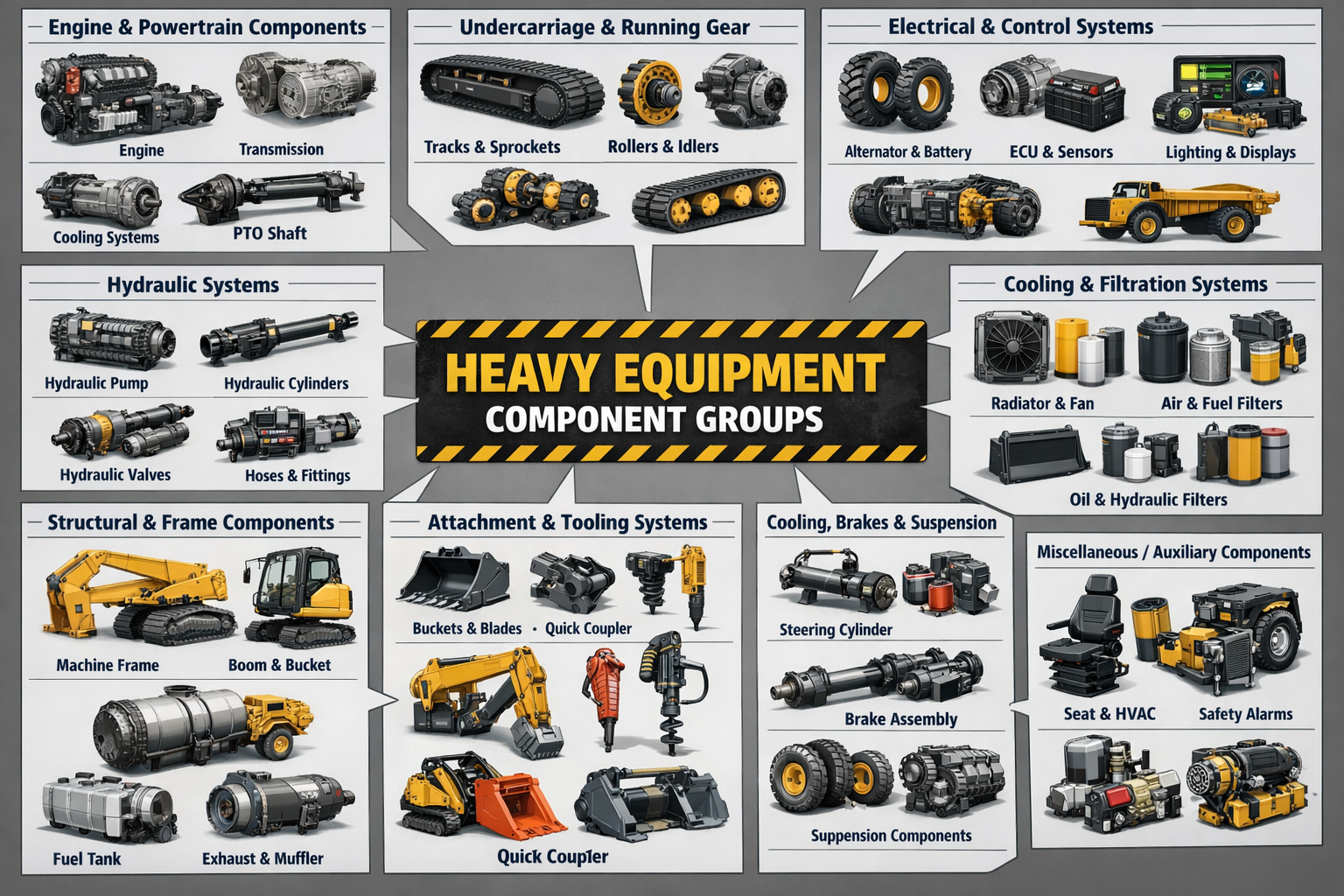
OEM, aftermarket, Used and reconditioned parts that meet global standards.
At TOSOG, quality is the foundation of everything we do. We partner with trusted global manufacturers to source durable, high-performance components for all major earth-moving brands — including Caterpillar, Komatsu, Bell, Volvo, and Hitachi. Every part is tested, verified, and guaranteed to perform under tough South African conditions, helping your machinery stay reliable and productive for longer.
Efficient sourcing and delivery – wherever your site is.
We know downtime costs money. That’s why TOSOG maintains a streamlined import and logistics network to deliver the parts you need – fast. Whether you’re in Gauteng, Limpopo, Mpumalanga, KZN, or across SADC, our team ensures prompt shipping, customs clearance, and local distribution for seamless supply. You can depend on us for on-time delivery and real-time order updates from warehouse to worksite.
Affordable solutions without compromising quality.
As an independent importer and distributor, TOSOG provides cost-effective alternatives to OEM pricing. Our long-standing supplier relationships allow us to offer premium aftermarket and reconditioned options at highly competitive rates — without sacrificing reliability. You get the right part, right price, and right performance, ensuring maximum value for every purchase.
Real expertise from people who understand your machines.
Our team brings hands-on experience in mining, construction, and plant maintenance, giving you access to genuine expertise — not just sales talk. Whether you need help identifying a part, matching a serial number, or planning a component rebuild, we’re here to assist. TOSOG stands for trust, service, and long-term partnership, helping your business keep every machine running at its best.
Weichai Engines & Spare Parts in South Africa
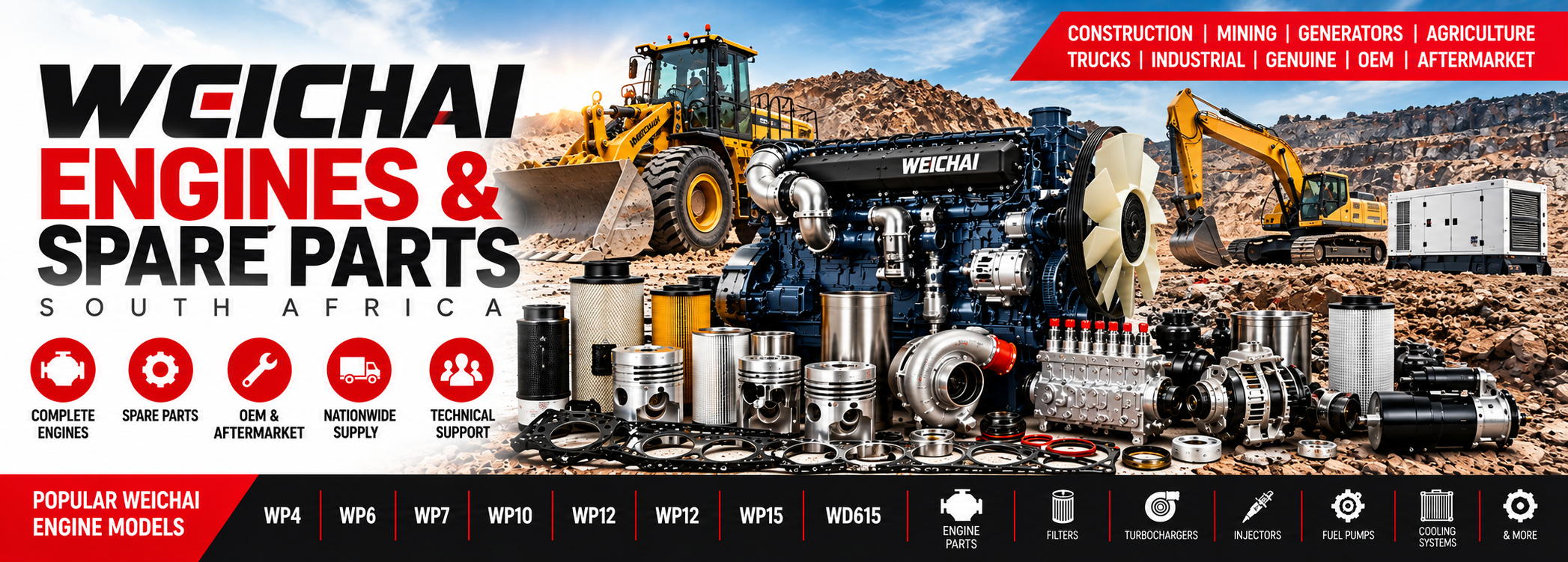 TOSOG supplies and sources Weichai engines and Weichai spare parts in South Africa for construction equipment, earthmoving machinery, generators, agricultural equipment, trucks and industrial applications. We can assist with complete Weichai engines, long blocks, cylinder heads, pistons, liners, crankshafts, turbochargers, injectors, fuel pumps, water pumps, oil pumps, gaskets, filters, sensors, starter motors, alternators and engine components. Our sourcing range includes popular Weichai engine families such as WP4, WP6, WP7, WP10, WP12, WP13, WP15 and WD615, subject to model and serial-number verification. Whether you need a Weichai engine replacement, genuine/OEM-equivalent component or aftermarket spare part, TOSOG can help identify and source the correct component for your application, with delivery or collection options available in South Africa.
-

607-5658 CAT Rear Swing Drive (Without Motor)
CAT 607-5658 Rear Swing Drive (Without Motor) – OEM-spec swing drive gearbox for Caterpillar excavators, offering smooth rotation, high torque handling, and durable performance. Motor not included.Read more -
CAT 299-5204 – Body Assembly (Steering Piston)
-
Day Rate
R30,734.61 Excl VAT
Add to cart -
-
OEM Bell B40D – Reconditioned Injector Set
OEM Reconditioned Injector Set for Bell B40D. Fully tested, calibrated, and ready to install. Restores power, improves fuel efficiency, and reduces smoke at a fraction of the cost of new injectors.Read more -
561-33-62120 – Komatsu Piston – HD780 / HD785 / HD985
OEM 561-33-62120 piston for HD780, HD785, and HD985 dump trucks. High-strength, precision-engineered piston designed for maximum durability, performance, and engine reliability in heavy-duty mining applications.Read more -
6245-11-3100 – Komatsu Injector Assembly
OEM 6245-11-3100 Komatsu Injector Assembly engineered for precise fuel delivery, optimal engine performance, improved fuel efficiency, and long-lasting reliability in heavy-duty diesel applications.Read more -
6210-19-1814 – Komatsu Engine Gasket
-
Day Rate
R1,699.45 Excl VAT
OEM Komatsu Engine Gasket 6210-19-1814 – high-quality, heat-resistant gasket designed to provide a perfect seal and restore engine reliability in Komatsu diesel engines.Add to cart -
-
6211-31-2410 – Komatsu Piston Pin
-
Day Rate
R1,205.30 Excl VAT
Genuine high-strength piston pin designed for precise piston-to-connecting-rod alignment, durability, and long-term engine performance in Komatsu diesel engines.Add to cart -
-
6212-11-1103 – Cylinder Head Assembly
-
Day Rate
R24,202.83 Excl VAT
OEM 6212-11-1103 Cylinder Head Assembly – a complete, factory-spec engine head designed for durability, perfect fitment, and optimal combustion performance. Ideal for engine rebuilds and replacements.Add to cart -


Baudouin Engines & Spare Parts
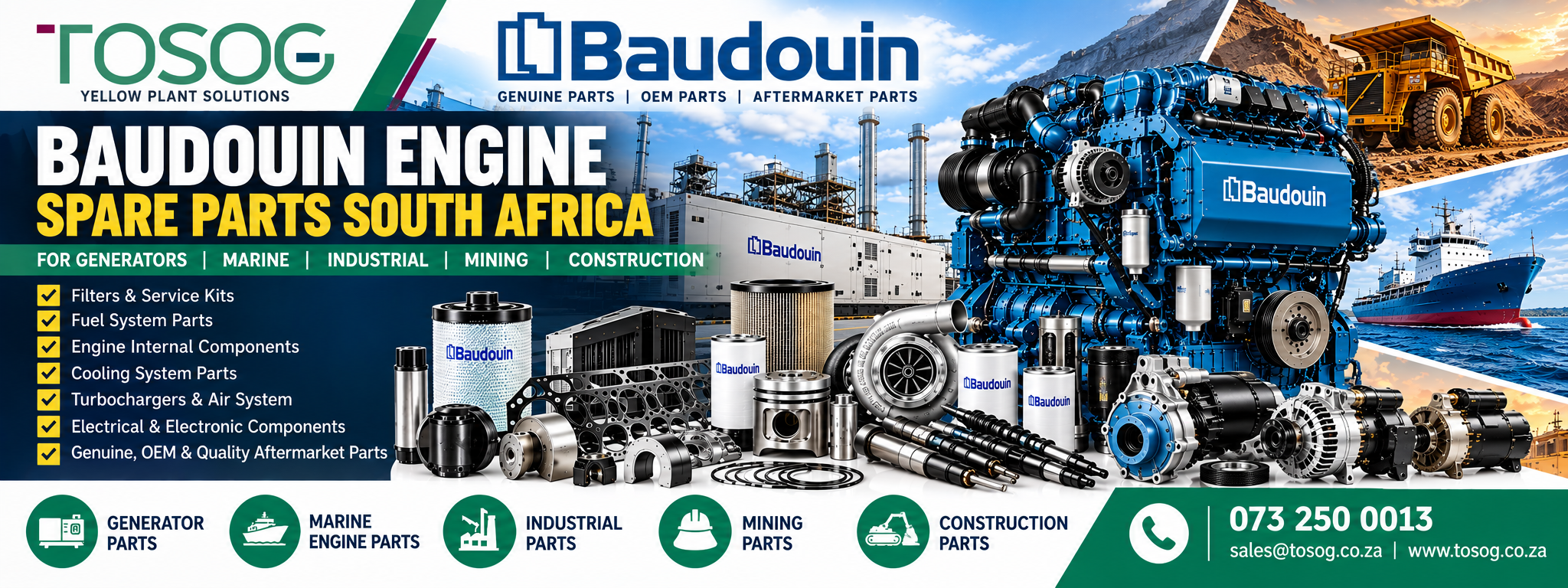 TOSOG supplies and sources Baudouin engines and Baudouin spare parts in South Africa for generators, construction equipment, industrial applications, agricultural machinery and heavy-duty power systems. We can assist with complete Baudouin diesel engines, replacement engines, engine components, filters, injectors, fuel pumps, turbochargers, water pumps, cylinder heads, pistons, liners, gaskets, crankshafts, alternators, starters, sensors and other genuine, OEM and aftermarket spare parts. Whether you require a replacement Baudouin engine or a specific component for an existing power unit, provide the engine model, serial number and part number where available, and our team can assist with identification and sourcing. TOSOG supplies Baudouin engines and spare parts to customers across South Africa, helping reduce equipment downtime and keep critical machinery and generator systems operating reliably.
Heavy Machinery Electronic Control Modules
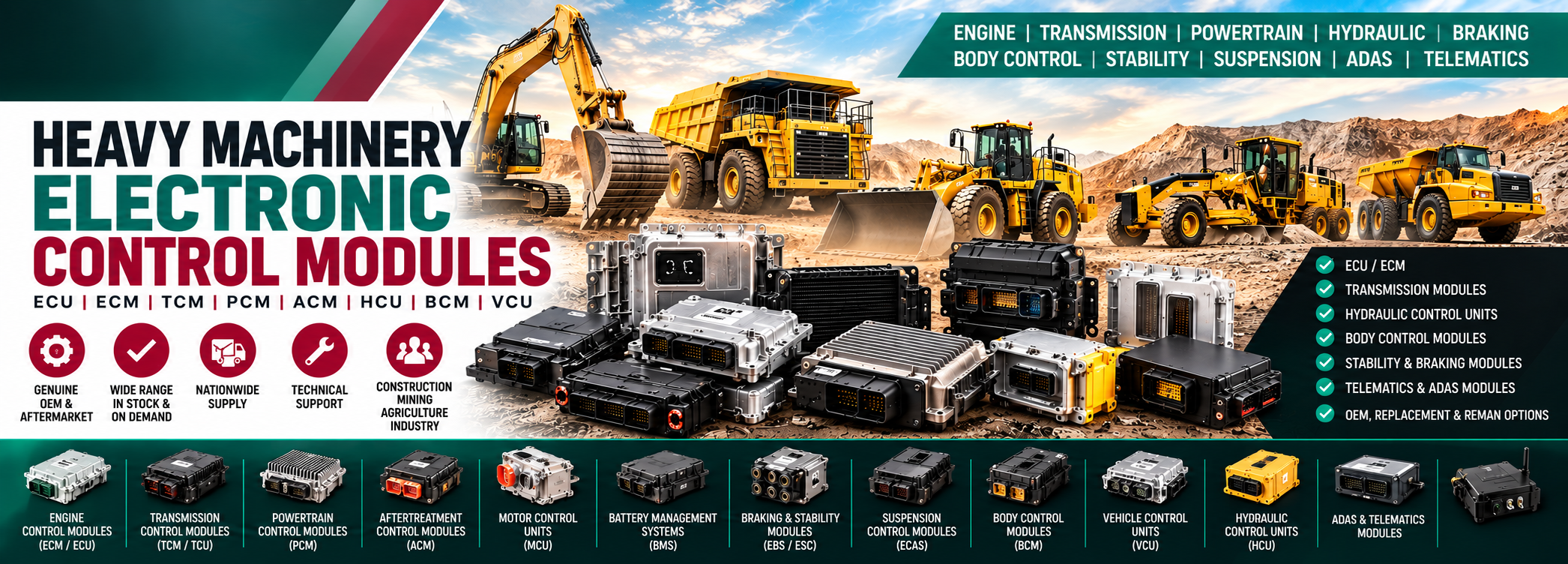 TOSOG supplies and sources Heavy Machinery Electronic Control Modules, ECUs and electronic components in South Africa for construction, mining, earthmoving, agricultural and industrial equipment. We assist customers with Engine Control Modules (ECM/ECU), Transmission Control Modules (TCM/TCU), Powertrain Control Modules (PCM), Aftertreatment Control Modules (ACM), Motor Control Units (MCU), Battery Management Systems (BMS), Electronic Braking System (EBS), Stability Control, Suspension Control, Body Control Modules (BCM), Vehicle Control Units (VCU), Hydraulic Control Units (HCU), ADAS and Telematics Gateway Modules. Our sourcing capabilities cover leading heavy-equipment and commercial-vehicle manufacturers, with support for OEM, replacement, aftermarket and selected remanufactured modules. Whether you need an ECU for a loader, excavator, grader, dozer, telehandler, ADT, truck, crane or other heavy-duty machine, TOSOG can assist with part-number identification, compatibility checks and sourcing. For accurate identification, provide the machine make, model, serial number, engine model, module part number and photographs of the existing module.